What Is the difference between a civil celebrant and a humanist celebrant?
Explore the difference between a Civil Celebrant and a Humanist Celebrant to choose the right ceremony for your needs.
Est. In 2023.

If you’re considering becoming a celebrant or arranging a ceremony, you may be wondering what the difference is between a civil celebrant and a humanist celebrant. Although the two roles are often confused, there are some important differences. Understanding these differences can help you choose the right celebrant for a ceremony or decide which training route is right for you.
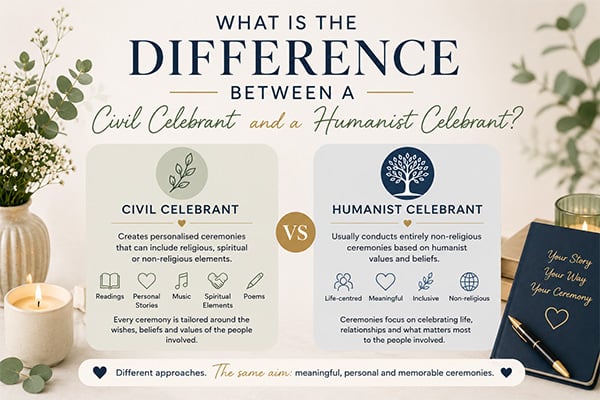
A civil celebrant creates personalised ceremonies that reflect the wishes, beliefs, and values of the people they are working with. One of the greatest strengths of a civil celebrant is flexibility. A ceremony can include religious elements, spiritual readings, or be completely non-religious. It may include hymns, prayers, Bible readings, poems, personal stories, or secular readings, depending entirely on what the family or couple would like.
Rather than following a fixed format, a civil celebrant writes each ceremony from scratch, ensuring it is unique and personal to the people at its heart.
A humanist celebrant usually conducts ceremonies that are entirely non-religious. Humanist ceremonies are based on humanist principles and do not include prayers, hymns, acts of worship, or religious readings. People who choose a humanist celebrant are generally looking for a ceremony that celebrates life and relationships without any religious content.
Neither approach is better than the other. The right choice depends entirely on the wishes of the people involved. Some families want a ceremony with no religious content at all, while others prefer the flexibility to include both religious and non-religious elements. This flexibility is one of the reasons many people choose an independent civil celebrant.
Understanding the difference between a civil celebrant and a humanist celebrant is important, particularly if you’re thinking about becoming a celebrant yourself. Every family and every couple has their own beliefs, traditions, and expectations, and a professional celebrant should always respect those wishes without judgement.
Good celebrancy is about listening, understanding what matters most, and creating a ceremony that genuinely reflects the people at its heart. It’s never about promoting your own beliefs or preferences, but about giving families and couples the ceremony they want.
The main difference between a civil celebrant and a humanist celebrant is flexibility. A civil celebrant can create a ceremony that includes religious, spiritual, or non-religious content, while a humanist celebrant conducts ceremonies that are entirely non-religious.
Neither approach is better than the other. The right choice simply depends on the wishes, beliefs, and values of the people involved. Both civil celebrants and humanist celebrants can create meaningful, personal, and memorable ceremonies when delivered with professionalism, kindness, and care.
The main difference is the philosophy that underpins the ceremony. A civil celebrant creates ceremonies that are personalised around the wishes, beliefs and values of the individual, couple or family. This may include religious content, spiritual readings or no religious elements at all, depending entirely on the client’s preferences. A humanist celebrant conducts non-religious ceremonies based on humanist principles and does not include acts of worship or religious content within the ceremony.
Yes. One of the strengths of civil celebrancy is its flexibility. If a family or couple would like to include a hymn, prayer, blessing, religious reading or moment of reflection alongside a largely non-religious ceremony, a civil celebrant can usually accommodate those wishes. The ceremony is designed around the people involved rather than following a fixed format or belief system.
Humanist ceremonies are based on humanist beliefs and are designed to be entirely non-religious. As a result, they do not usually include prayers, acts of worship or religious readings. Families who would like religious elements within a ceremony may therefore find that a civil celebrant offers greater flexibility to reflect their wishes.
There is no right or wrong choice. The best celebrant is the one whose approach matches your beliefs, values and the type of ceremony you would like to create. Some families prefer a completely non-religious ceremony, while others want a personalised ceremony that includes a small number of religious or spiritual elements. Speaking to your chosen celebrant beforehand will help ensure they can create the ceremony you are looking for.
Not necessarily. Civil celebrants come from many different backgrounds and hold a wide variety of personal beliefs. Some may have a religious faith, some may identify as spiritual and others may have no religious beliefs at all. Their own beliefs are not the focus of the ceremony. Instead, their role is to create a ceremony that reflects the wishes, beliefs and values of the family or couple they are supporting.
Yes. Both civil celebrants and humanist celebrants conduct funeral ceremonies. The difference lies in the style and content of the ceremony rather than the role itself. Both aim to create meaningful and respectful ceremonies, but they do so within the principles and approach of their respective traditions.
Yes. Both civil celebrants and humanist celebrants may conduct naming ceremonies, weddings and other life celebrations, depending on the legal framework within their part of the UK. As with funerals, the main difference is the style of ceremony and whether religious content can be included.
Many civil celebrants and humanist celebrants complete professional training before beginning their careers. Training providers, qualifications and accreditation can vary, so it is always worth asking about a celebrant’s experience, qualifications and ongoing professional development when choosing someone to conduct your ceremony.
Neither is inherently better than the other. Both can provide thoughtful, professional and meaningful ceremonies. The most important consideration is choosing a celebrant whose approach aligns with your wishes. A good celebrant will listen carefully, understand your preferences and create a ceremony that feels authentic to you and your family.
Start by thinking about the type of ceremony you would like. Consider whether you want a completely non-religious ceremony or whether you would like the flexibility to include religious, spiritual or cultural elements. Speak to potential celebrants, ask about their approach and choose someone who makes you feel comfortable and understood. A good relationship with your celebrant is often one of the most important factors in creating a meaningful and memorable ceremony.
For more information about our celebrancy training courses, including the NOCN Level 3 Diploma in Funeral Celebrancy, the NOCN Level 3 Diploma in Wedding and Naming Ceremonies, and the NOCN Level 3 Certificate in UK Celebrancy, please visit our course pages.
If you have any questions about celebrant training, qualifications or becoming a professional celebrant, please contact us. We are always happy to help, with honest advice.
Explore the difference between a Civil Celebrant and a Humanist Celebrant to choose the right ceremony for your needs.
Uncover the difference between a celebrant and a registrar. Essential insights for those considering celebrant training.
Uncover how long does celebrant training take and understand what factors influence the completion time for your course.