This is an important question, and one that people are often surprised by.
At present, celebrancy itself is not legally regulated in the same way as professions such as law, medicine, teaching, social care or many registered health professions. Technically, this means anyone can call themselves a celebrant.
However, that does not mean all celebrant training or qualifications are equal.
At The School of Civil Celebrancy, we believe this makes proper professional training even more important, not less.
Celebrants work with people during some of the most emotional and important moments in life. Whether conducting a funeral, leading a wedding ceremony, welcoming a new child through a naming ceremony, or supporting a family through difficult conversations, celebrants are trusted to guide people with confidence, professionalism and compassion.
Families deserve celebrants who are properly trained, ethical and able to deliver ceremonies that truly reflect the people they are working with. Good celebrancy is about far more than standing in front of people and reading words from a script. It requires excellent communication skills, careful listening, empathy, organisation and the ability to write and deliver meaningful ceremonies that are unique to every family or couple.
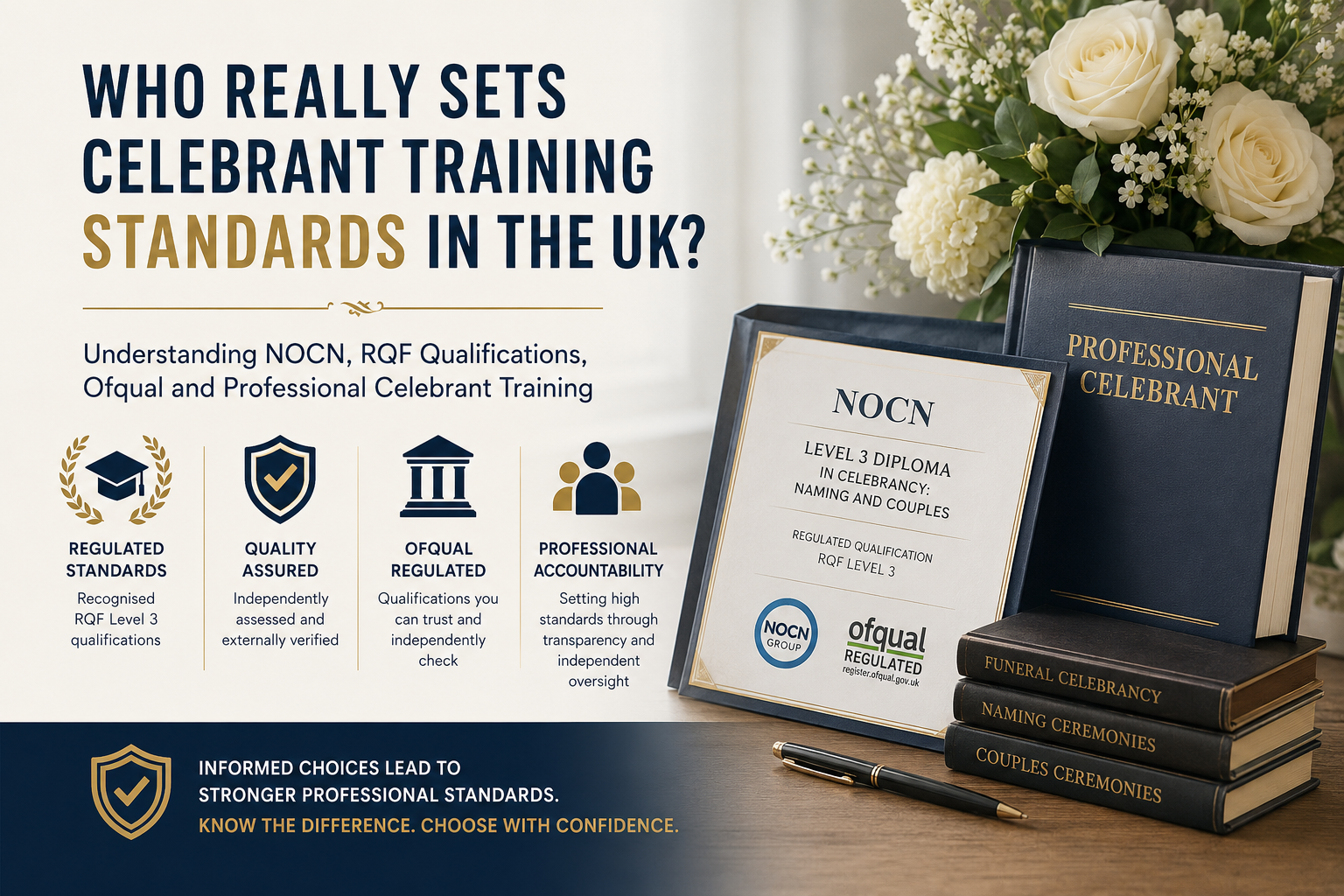
Although celebrancy is not legally regulated, there are recognised qualifications and occupational standards available. Many respected celebrants choose accredited qualifications through recognised awarding bodies such as NOCN. These qualifications help ensure celebrants develop the knowledge, practical skills and professional standards needed to work confidently with the public.
Accreditation means a course has been independently assessed against recognised standards. This provides reassurance that the training has been properly designed, quality assured and regularly monitored. Choosing an accredited qualification gives students confidence that they are learning from a programme that meets nationally recognised standards rather than simply completing an unregulated online course.
There is also increasing discussion about the future of celebrancy within the UK. Proposed wedding law reforms could give independent celebrants the legal authority to conduct marriages, rather than simply leading a personalised ceremony alongside a separate legal registration. If these reforms are introduced, the role of the celebrant will become even more significant, making high-quality training and professional standards increasingly important.
Alongside this, there has also been growing discussion about the regulation of funeral directors following a number of high-profile cases that have caused understandable concern for bereaved families. Although this is separate from celebrancy, it highlights a wider expectation that professionals involved in life’s most important moments should work to recognised standards, demonstrate professionalism and be accountable for the service they provide.
Society rightly expects people working in positions of trust to meet recognised standards, whether they are teachers, healthcare professionals, those working in social care, funeral directors or celebrants. While the way these professions are regulated may differ, the expectation of professionalism, competence and ethical practice remains the same.
Professional ethics are also a vital part of good celebrancy. Every celebrant should understand the importance of confidentiality, professional boundaries, safeguarding, respectful communication, cultural awareness and treating every family with dignity and compassion. These are not simply desirable qualities; they are essential to providing a professional service.
While celebrancy may not currently be legally regulated, professionalism matters enormously. The absence of legal regulation makes it even more important for anyone considering a career as a celebrant to choose a recognised, accredited training provider that places quality, ethics and ongoing professional development at the heart of its courses.
Ultimately, celebrancy is built on trust. Families place enormous confidence in the person standing beside them during some of the most important moments of their lives, and that trust should always be earned through proper training, professionalism and a genuine commitment to high standards.