Self-regulation in celebrancy: Why professional standards still matter
Learn about self-regulation in celebrancy and the importance of professional standards in supporting emotional life events.
Est. In 2023.


If you have ever attended a funeral, wedding, or naming ceremony that felt personal and heartfelt, there is a good chance it was led by a celebrant.
Over the last few years, more and more people across the UK have started choosing celebrant-led ceremonies because they want something more personal, flexible, and meaningful. Because of this, celebrancy has become a growing and rewarding career for people from many different backgrounds.
One of the questions I am asked most often through The School of Civil Celebrancy is simple:
“How do you actually become a celebrant?”
The good news is that there is no single “type” of person who becomes a celebrant. People come into celebrancy from all walks of life. Some have worked in healthcare, teaching, social care, hospitality, business, funeral services, or public speaking. Others are looking for a more meaningful career later in life.
At its heart, celebrancy is about people.
It is about listening well, communicating warmly, and helping people through some of the most important moments of their lives.
A celebrant creates and leads personalised ceremonies.
This may include:
Unlike more traditional services, celebrant-led ceremonies are written around the individual, couple, child, or family.
No two ceremonies should ever feel exactly the same.
If you would like to learn more about the day-to-day role of a professional celebrant, read our guide What Does a Celebrant Actually Do?
In the UK, celebrancy itself is not legally regulated, at the moment however the Wedding Reform and the regulation which is currently being looked into for the funeral profession, this may change. However, proper professional training is incredibly important.
Families and couples place enormous trust in celebrants. They deserve someone who understands ceremony structure, communication, professionalism, safeguarding, public speaking, and how to support people emotionally and respectfully.
That is why choosing proper accredited training matters.
At The School of Civil Celebrancy, we believe celebrants should train to recognised national occupational standards, not simply complete a quick online course with little support.
If you are unsure whether formal training is necessary, our guide What Qualifications Do You Need to Be a Celebrant? explains why recognised qualifications are becoming increasingly important within the profession.
The right qualification depends on where you are starting and the type of ceremonies you wish to conduct.
Some learners begin with a certificate before progressing to a diploma, while others choose to start with a diploma depending on their experience and career goals.
If you are unsure which route is right for you, our guide Certificate vs Diploma explains the differences between the two qualifications and who each is designed for.
If you are completely new to celebrancy, our Certificate Course provides an excellent introduction to professional celebrancy.
If you are completely new to celebrancy, our Certificate Course provides an excellent starting point, helping you build confidence before progressing to higher-level qualifications.
If your goal is to become a professional funeral celebrant, our nationally recognised NOCN Level 3 Diploma in Funeral Celebrancy provides the knowledge and practical skills needed to work confidently with bereaved families.
Those wishing to become professional funeral celebrants can find full details of our NOCN Level 3 Diploma in Funeral Celebrancy, including course content, assessment and learner support.
If your ambition is to conduct weddings, naming ceremonies and other family celebrations, explore our NOCN Level 3 Diploma in Celebrancy: Naming & Couples Ceremonies to see how the qualification prepares you for this rewarding area of celebrancy.
People often assume celebrants need to be confident performers. In reality, some of the very best celebrants are simply warm, caring people who know how to connect with others.
Good celebrants are often:
You do not need to be perfect.
You simply need to care about people.
Many people wonder whether they have the right background or experience. Our article Can Anyone Become a Celebrant? explores the qualities that matter most.
Yes, absolutely.
Many people now choose online celebrant training because it offers flexibility around work, family, and life commitments.
The important thing is choosing a school that still offers proper guidance, mentoring, and support throughout the process.
Training should never feel cold or impersonal.
You can discover why more learners are choosing flexible online training by reading Benefits of Learning by Zoom, where we explain how interactive virtual learning can be just as engaging as face-to-face training.
For many people, yes.
Celebrancy can offer:
No two days are ever quite the same.
For many celebrants, this career becomes far more than simply earning a living. Read Why Being a Celebrant is More Than Just a Job to discover why so many people describe celebrancy as a true vocation. However, celebrancy is also demanding, requiring time, emotional resilience, preparation and professionalism. Our article Why Celebrancy Isn’t an Easy Dream Job explains the realities behind this rewarding career.
Becoming a celebrant is not about becoming someone different.
It is about using your existing life experience, compassion, and communication skills to help others during important moments in life.
Whether you are just starting to explore celebrancy or are ready to begin your training, The School of Civil Celebrancy offers the training you need together with ongoing mentoring and support to help you succeed.
Explore all of our celebrancy courses to find the qualification that’s right for you. Take your time, ask questions, and choose training that values professionalism, kindness, and real human connection.
That matters more than anything.
There is no single route to becoming a celebrant in the UK. Most people begin by researching the profession, deciding which type of ceremonies they would like to conduct and then completing professional training. Once qualified, many celebrants begin building relationships with funeral directors, wedding venues and other professionals while developing their own business. Like any career, success comes through a combination of training, experience and dedication.
There is currently no legal requirement to hold a formal qualification to work as an independent celebrant in the UK. However, completing professional training is strongly recommended as it provides the knowledge, confidence and practical skills needed to create and deliver meaningful ceremonies. Many learners also choose nationally recognised qualifications to demonstrate their commitment to high professional standards.
People from many different backgrounds become successful celebrants. Teachers, nurses, emergency service personnel, business owners, carers, funeral professionals and those changing careers later in life all bring valuable experience to the role. What matters most is having empathy, excellent communication skills, a willingness to learn and a genuine desire to help people.
The answer depends on the course you choose. Some introductory courses can be completed in a relatively short time, while more comprehensive qualifications take longer and explore the profession in much greater depth. The important thing is not how quickly you qualify, but how well prepared you are to begin working with real families and couples.
Successful celebrants are compassionate, approachable and organised. They are good listeners who enjoy meeting people, writing personalised ceremonies and speaking confidently in public. They are also professional, reliable and committed to providing every client with a ceremony that reflects their wishes and personality.
Absolutely. Many celebrants begin their careers in their forties, fifties or even after retirement. In fact, life experience is often one of a celebrant’s greatest strengths. The ability to relate to people, communicate with empathy and understand life’s important moments often develops through experience, making celebrancy an excellent second or even third career.
Yes. Many celebrants begin by working part-time while continuing with their existing career. This allows them to gain experience, build confidence and establish their business before deciding whether to become a full-time celebrant. The flexibility of celebrancy makes it an attractive option for many people seeking a better work-life balance.
Celebrants can specialise in different areas depending on their interests and training. Many conduct funeral ceremonies, while others focus on weddings, naming ceremonies, vow renewals and other milestone celebrations. Some celebrants choose to train in more than one area, allowing them to support people through many of life’s most significant moments.
Look for a training provider that offers comprehensive learning, experienced tutors, ongoing support and qualifications that reflect recognised professional standards. It is also worth considering what support is available after you qualify, as building a successful celebrancy business requires much more than simply completing a course.
Qualifying is just the beginning of your journey. Most celebrants spend time building their confidence, developing relationships with local funeral directors or wedding suppliers, creating a professional website and marketing their services. With dedication, continuous learning and excellent client care, many go on to build rewarding and successful celebrancy businesses.
For more information about our celebrancy training courses, including the NOCN Level 3 Diploma in Funeral Celebrancy, the NOCN Level 3 Diploma in Wedding and Naming Ceremonies, and the NOCN Level 3 Certificate in UK Celebrancy, please visit our course pages.
If you have any questions about celebrant training, qualifications or becoming a professional celebrant, please contact us. We are always happy to help, with honest advice.
Learn about self-regulation in celebrancy and the importance of professional standards in supporting emotional life events.
Explore the question: Is celebrancy regulated in the UK? Learn why proper training is essential for celebrants’ professionalism.
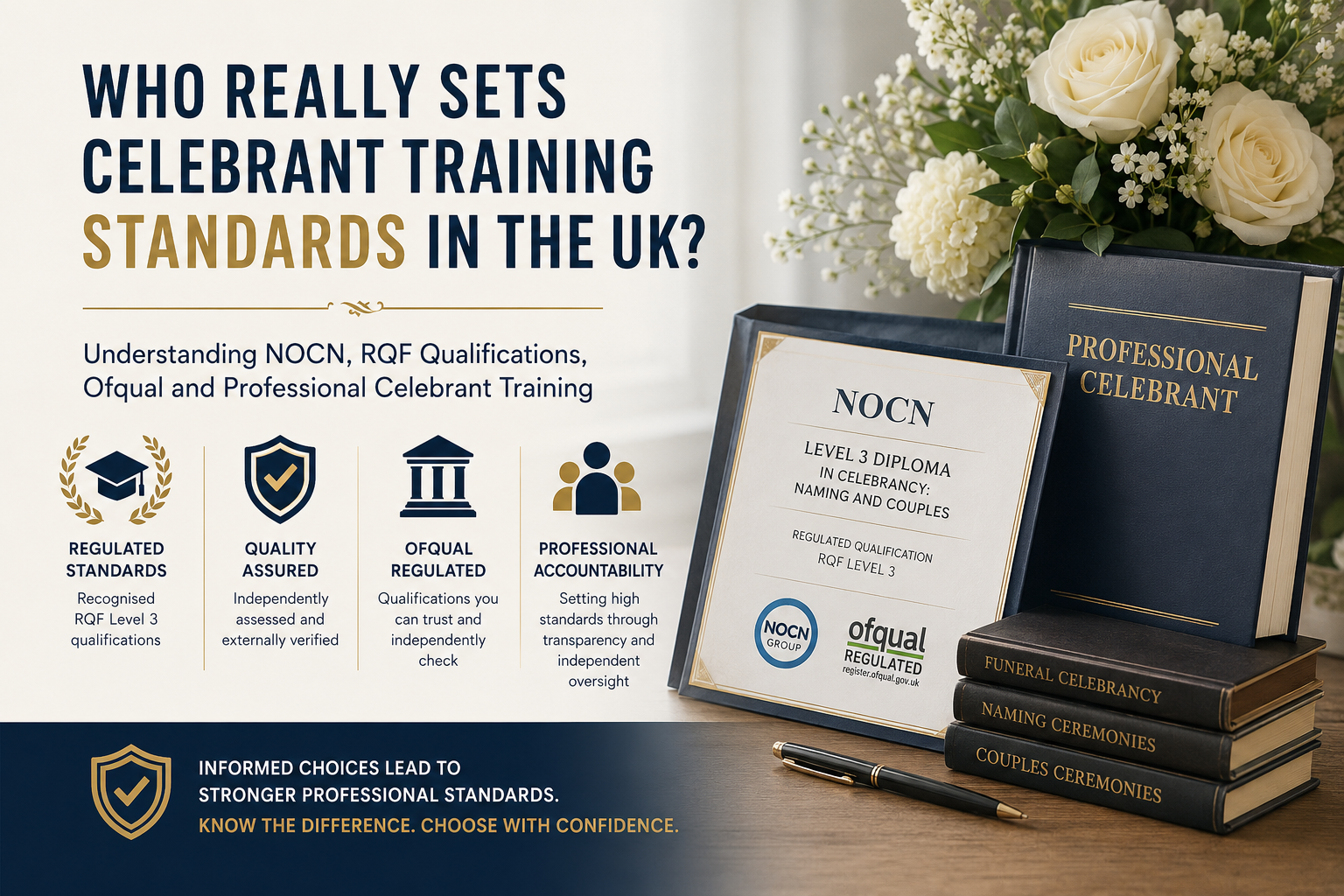
Who sets celebrant training standards in the UK? Understand NOCN, RQF Level 3 qualifications, Ofqual and what NOCN Approved Centre status means.