
Why Celebrancy Isn’t an Easy Dream Job
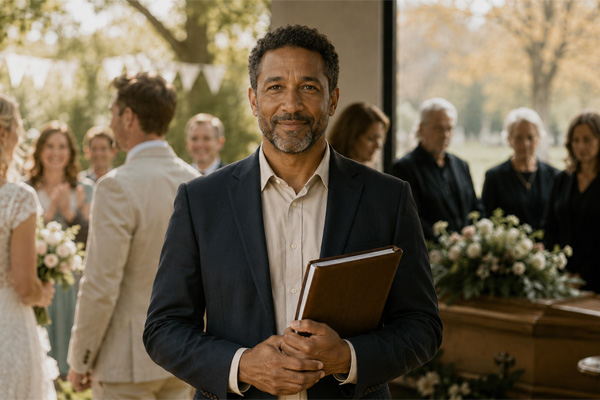
If you are thinking about becoming a celebrant, it is easy to see why the profession attracts so much interest. Social media is full of beautiful wedding ceremonies, heartfelt funeral services and smiling families thanking the celebrant who helped make an important day so special. From the outside, celebrancy can appear to offer the perfect balance of meaningful work, flexible hours and the opportunity to make a real difference in people’s lives.
While there is certainly truth in that picture, it is only part of the story.
The reality of becoming a celebrant is very different from the image often portrayed online. Behind every ceremony lies hours of preparation, careful planning, thoughtful writing and professional organisation. Successful celebrants do far more than stand in front of people and deliver a ceremony. They become trusted guides, skilled communicators and compassionate professionals who support families and couples during some of the most significant moments of their lives.
At The School of Civil Celebrancy, we believe it is important to give prospective celebrants an honest understanding of the profession. We want people to be inspired by the opportunities that celebrancy offers, but we also believe they should understand the responsibilities that come with the role. Those who begin their journey with realistic expectations are far more likely to build successful, rewarding and long-lasting careers.
If you are considering becoming a celebrant, this guide will help you understand what life in the profession is really like. We will explore the work that happens behind the scenes, the skills that every celebrant needs, the realities of running a celebrancy business and why so many people describe celebrancy as the best job in the world despite the challenges it brings. If you are still unsure about the day-to-day responsibilities of the role, our guide What Does a Celebrant Actually Do? explains exactly what professional celebrants do from the first client enquiry through to delivering a ceremony.
Celebrancy Is About Far More Than Delivering a Ceremony
When people think about celebrancy, they naturally picture the ceremony itself. They imagine a celebrant standing confidently at the front of a crematorium chapel, beside a wedding couple or in front of family and friends at a naming ceremony. While these are undoubtedly the most visible parts of the profession, they represent only a small proportion of the work that a professional celebrant carries out.
Every ceremony begins long before anyone arrives at the venue. Funeral celebrants spend time getting to know grieving families, listening carefully to stories about the person who has died and gathering the information needed to create a heartfelt and personal tribute. Wedding celebrants meet with couples to understand their relationship, their personalities and the vision they have for their special day. Naming celebrants work closely with parents to create ceremonies that celebrate the arrival of a child and the love and support that surrounds them.
Those conversations form the foundation of every ceremony. They allow the celebrant to understand not only the facts but also the emotions, relationships and memories that make each ceremony unique. Without taking the time to listen, it would be impossible to create a ceremony that genuinely reflects the people involved.
Many people are surprised to discover just how much preparation takes place before a ceremony is ever delivered. Alongside client meetings, celebrants spend time researching information, writing personalised scripts, editing and refining their work, confirming music and readings, communicating with funeral directors, wedding venues and other suppliers, checking timings and ensuring every detail has been carefully planned. By the time the ceremony takes place, many hours of unseen work have already been completed.
Every Ceremony Deserves to Be Personal
One of the qualities that distinguishes an exceptional celebrant from an average one is the ability to create ceremonies that feel completely personal. Every family has its own stories, every couple has followed a unique journey and every child welcomed through a naming ceremony already has a story beginning to unfold. Because no two lives are the same, no two ceremonies should ever feel identical.
This is why professional celebrants avoid relying heavily on generic scripts or simply changing names within a template. While templates can provide a useful framework, they should never replace genuine creativity or careful listening. The most memorable ceremonies are those that sound authentic because they have been written specifically for the people sitting in front of the celebrant.
Writing in this way requires far more than good grammar. A celebrant must understand how to balance emotion with humour, how to tell a story naturally and how to create a ceremony that feels engaging without becoming theatrical. They also need the confidence to adapt their writing style to suit different personalities, cultures, beliefs and family circumstances. These are skills that develop over time through training, practice and experience rather than something that can be learned overnight.
Listening Is the Most Underrated Celebrancy Skill
When people ask what skills are needed to become a celebrant, public speaking is often the first thing that comes to mind. While speaking confidently in front of people is undoubtedly important, experienced celebrants will often tell you that listening is an even more valuable skill.
Families rarely remember the celebrant who delivered a perfect speech if they felt unheard during the planning process. What they remember is someone who genuinely listened to their memories, understood what mattered most and created a ceremony that reflected the person they loved. The same is true for couples planning a wedding ceremony. They want a celebrant who is interested in their story rather than simply asking them to complete a questionnaire before producing a standard ceremony.
Listening carefully allows celebrants to notice the details that make every ceremony special. It may be a favourite saying that always made the family laugh, a story that perfectly captures someone’s personality or a shared memory that instantly brings smiles to everyone’s faces. These moments cannot be manufactured. They are discovered by giving people the time, space and encouragement to share what matters most.
For anyone considering becoming a celebrant, developing excellent listening skills is just as important as learning how to write or deliver a ceremony. They form the foundation upon which every meaningful ceremony is built.
Supporting People During Life’s Most Significant Moments
One of the reasons celebrancy is so rewarding is because it allows you to make a genuine difference to people’s lives. At the same time, this is one of the greatest responsibilities that the profession carries.
Funeral celebrants often meet families during one of the most difficult periods they will ever experience. Grief affects everyone differently and there is no right or wrong way for people to respond. Some families are eager to share stories and memories, while others struggle to find the words. Some laugh through tears as they remember happier times, while others simply need someone to guide them gently through the practical decisions that need to be made.
A professional celebrant must be able to adapt to every situation. Compassion is essential, but so too is organisation, confidence and calm leadership. Families look to their celebrant for reassurance, guidance and professionalism at a time when they may feel overwhelmed. Supporting people in this way is a privilege, but it is also a responsibility that should never be underestimated.
The same principles apply to wedding and naming ceremonies. Although these occasions are joyful rather than marked by grief, couples and families still place enormous trust in their celebrant. They want someone who understands how important the day is and who will take the same care and attention whether the ceremony is attended by twenty people or two hundred.
Flexibility Does Not Always Mean Fewer Hours
One of the reasons many people are attracted to becoming a celebrant is the promise of flexibility. Unlike many traditional careers, celebrants often have the freedom to organise their own diary, decide how many ceremonies they accept and, to some extent, choose when they work. For many people, particularly those looking for a better work-life balance or a career change, this can be incredibly appealing.
However, flexibility should never be confused with working fewer hours.
Professional celebrants work around the lives of their clients rather than expecting clients to work around them. Family meetings often take place during the evening because people are at work during the day. Wedding ceremonies are frequently held on Saturdays, and funeral arrangements can change with very little notice. Emails and telephone calls rarely arrive neatly between nine o’clock and five o’clock, and there will be occasions when a family simply needs reassurance or guidance outside normal working hours.
Most experienced celebrants will tell you that the profession offers flexibility, but it also demands commitment. There are evenings spent writing ceremonies, weekends delivering weddings and early mornings travelling to venues. During busy periods, it is not unusual for celebrants to work long days to ensure every client receives the time and attention they deserve. Those entering the profession with realistic expectations tend to adapt well because they understand that flexibility is earned through careful planning, organisation and excellent time management.
Becoming a Celebrant Also Means Becoming a Business Owner
One of the biggest surprises for many newly qualified celebrants is discovering that delivering ceremonies is only one part of the job. The majority of celebrants are self-employed, which means they are also responsible for running every aspect of their own business. While training teaches you how to create and deliver meaningful ceremonies, building a successful career also requires an understanding of marketing, customer service and business management.
A professional website, active social media accounts and a clear online presence all play an important role in attracting new enquiries. Celebrants also spend time networking with funeral directors, wedding venues and other professionals, maintaining relationships within their local community and ensuring they remain visible to potential clients. Every email, telephone call and enquiry must be answered promptly because first impressions often determine whether a client chooses to book your services.
Alongside marketing, there is the day-to-day administration that every business owner faces. Invoices need to be raised, accounts kept up to date, insurance renewed, professional memberships maintained and tax responsibilities met. Continuing professional development also becomes part of everyday life, as successful celebrants understand that learning should never stop.
Many people underestimate this side of the profession, but it is one of the reasons why quality training is so important. A good training provider should prepare learners not only to conduct ceremonies but also to understand the realities of building a successful celebrancy business. If you are wondering how flexible training can fit around your existing commitments, take a look at Benefits of Learning by Zoom, where we explain how many of our learners successfully balance training with work and family life.
Professionalism Is the Foundation of Every Successful Celebrant
Every time a family or couple chooses a celebrant, they place an enormous amount of trust in that individual. They trust them to arrive on time, to communicate clearly, to listen carefully and to deliver a ceremony that reflects the people they love. Most importantly, they trust them not to let them down on one of the most important days of their lives.
Professionalism is not simply about wearing the right clothes or speaking confidently. It is reflected in every interaction a celebrant has with their clients. It begins with answering enquiries promptly, responding politely to questions and making people feel valued from the very first conversation. It continues through careful preparation, attention to detail and ensuring that every ceremony is written with the same level of care, regardless of its size or location.
The most respected celebrants understand that there are no second chances. A wedding cannot be repeated because the celebrant forgot an important detail, and a funeral cannot simply be delivered again if something goes wrong. This is why successful celebrants prepare thoroughly, check every detail and always allow time for the unexpected. Reliability becomes one of their greatest strengths because clients know they can depend on them when it matters most.
Professionalism also means recognising your own responsibilities. It means respecting confidentiality, behaving ethically, continuing to develop your knowledge and always putting the needs of your clients first. These qualities build trust, and trust is the foundation upon which every successful celebrancy career is built.
The Emotional Rewards Are Unlike Any Other Career
Although this article has focused on the realities and responsibilities of becoming a celebrant, it is equally important to understand why so many people remain passionate about the profession throughout their careers. The truth is that celebrancy offers rewards that few other professions can match.
There is something incredibly special about helping a grieving family celebrate the life of someone they loved. Knowing that your words have brought comfort during an incredibly difficult time is a privilege that never loses its significance. Equally, standing beside a couple as they make lifelong promises to one another or welcoming a child into a family through a naming ceremony reminds celebrants why they chose this profession in the first place.
These moments are deeply personal, and they remain with you long after the ceremony has ended. Many celebrants can remember ceremonies they conducted years ago because of the people they met, the stories they heard and the relationships they built. While the work can sometimes be emotionally demanding, the knowledge that you have genuinely made a difference to someone’s life provides a sense of fulfilment that is difficult to find elsewhere.
The rewards are not measured simply by income or flexible working hours. They are found in the thank-you cards from families, the recommendations from couples and the quiet satisfaction that comes from knowing you have helped create memories that people will treasure for the rest of their lives.
Becoming a Celebrant Is About Choosing the Right Reasons
If you are thinking about becoming a celebrant, it is important to ask yourself why this profession appeals to you. If your motivation is simply to find an easy career with flexible hours and quick financial rewards, you may find that the reality falls short of your expectations. Celebrancy demands time, commitment, professionalism and a genuine willingness to place other people at the heart of everything you do.
However, if you enjoy meeting people, listening to their stories, writing meaningful ceremonies and supporting families through some of the most important moments of their lives, you may discover a career that is unlike any other. It is not always easy, and there will be days when the emotional weight of the profession feels significant, but there will also be moments of incredible joy, gratitude and pride that remind you exactly why you chose this path.
Before taking the next step, it is worth considering the training that will best prepare you for the profession. Every celebrant begins somewhere, and choosing the right course can make a significant difference to your confidence, knowledge and future success. What Qualifications Do You Need to Be a Celebrant? explains the qualifications available, while Can Anyone Become a Celebrant? explores the qualities that matter most.
Building a Successful Celebrancy Career Takes Time
One of the biggest misconceptions about becoming a celebrant is that completing a training course automatically leads to a busy diary filled with ceremonies. Like many professions, celebrancy is a career that develops over time. While training provides the knowledge and practical skills needed to begin working professionally, building a strong reputation and a successful business requires patience, consistency and dedication.
Most celebrants begin by conducting a relatively small number of ceremonies while introducing themselves to funeral directors, wedding venues and other professionals within their local area. Every ceremony provides an opportunity to build confidence, develop experience and demonstrate professionalism. Families and couples who receive an exceptional service often recommend their celebrant to friends and relatives, while funeral directors and venues are more likely to recommend celebrants they know to be reliable, organised and easy to work with.
For this reason, successful celebrants rarely focus solely on the next booking. Instead, they focus on providing the highest possible standard of service every single time. Reputation is built one ceremony at a time, and over the years that reputation often becomes a celebrant’s greatest asset.
Many people ask how long it takes to establish a successful celebrancy business, but there is no simple answer. Some celebrants build their diary quickly, while others take longer depending on their location, previous experience and the time they are able to dedicate to their business. What remains consistent is that those who are committed to delivering excellent service, continuing to learn and developing strong professional relationships are the ones most likely to enjoy long-term success.
Why Choosing the Right Celebrant Training Matters
Every profession begins with learning the necessary knowledge and skills, and celebrancy is no different. Although it may appear that delivering a ceremony is simply about standing in front of people and reading from a script, professional celebrancy requires far more than confidence in public speaking.
A well-trained celebrant understands how to structure a meaningful ceremony, write engaging and personal scripts, communicate effectively with clients, manage sensitive conversations and conduct ceremonies with professionalism and confidence. They also understand the importance of ethics, confidentiality, safeguarding and representing the profession to the highest possible standard.
Choosing the right training provider is therefore one of the most important decisions any aspiring celebrant will make. A quality course should do more than teach ceremony structure. It should prepare learners for the realities of working with real families and couples, provide constructive feedback, encourage professional development and build confidence through practical learning.
If you are beginning your journey, our guide What Qualifications Do You Need to Be a Celebrant? explains the qualifications available and how they can help prepare you for a successful career. You may also find Certificate Course useful if you are looking at your first step into celebrancy, or Certificate vs Diploma if you are unsure which level of training is right for you.
Learning Does Not End When the Course Finishes
One of the characteristics shared by the most respected celebrants is their commitment to continuous learning. Training provides an excellent foundation, but every ceremony brings new experiences, new challenges and fresh opportunities to develop professionally.
Over time, celebrants refine their writing style, strengthen their public speaking skills and become more confident in supporting people from a wide range of backgrounds. They learn how to adapt their ceremonies to different personalities, cultures and beliefs while remaining sensitive to the individual needs of every family or couple they work with.
Professional development also means keeping up to date with changes within the profession. Whether that involves legislation, best practice, safeguarding or communication skills, successful celebrants understand that learning is an ongoing process rather than something that ends when a qualification is achieved.
Many experienced celebrants continue to attend workshops, participate in mentoring, share ideas with colleagues and reflect on every ceremony they deliver. This willingness to keep improving is one of the reasons why some celebrants build outstanding reputations that last throughout their careers.
The Qualities That Make an Exceptional Celebrant
People often ask whether anyone can become a celebrant. While there is no single type of person who enters the profession, there are certain qualities that consistently appear among the most successful celebrants.
Compassion is perhaps the most obvious. Families and couples need someone who genuinely cares about the people they are working with rather than simply completing another booking. Good communication is equally important because celebrants spend much of their time listening, asking thoughtful questions and helping clients express what they want their ceremony to say.
Organisation is another essential quality. Every ceremony involves deadlines, meetings, emails, revisions and careful planning. A professional celebrant needs to manage all of these responsibilities while ensuring every client feels valued and supported.
Resilience is often overlooked, yet it plays a significant role in long-term success. Not every week will go according to plan, and there will be occasions when ceremonies change at short notice or unexpected challenges arise. The ability to remain calm, adaptable and professional is one of the qualities that helps celebrants build trust with both clients and colleagues.
If you are wondering whether this profession is right for you, our article Can Anyone Become a Celebrant? explores these qualities in greater depth and explains why people from many different backgrounds go on to enjoy successful careers in celebrancy.
Is Becoming a Celebrant the Right Career for You?
Choosing a new career is never a decision that should be taken lightly, particularly when that career involves supporting people during some of the most important moments of their lives. Becoming a celebrant is not simply about changing jobs. For many people, it becomes a complete change in lifestyle, perspective and purpose.
The profession offers enormous variety. No two ceremonies are ever the same, and no two working weeks are identical. You will meet people from every walk of life, hear remarkable stories and have the privilege of helping others celebrate, remember and reflect. At the same time, the work requires commitment, professionalism and a willingness to continue learning throughout your career.
If you enjoy writing, communicating, meeting people and making a genuine difference, celebrancy may prove to be one of the most rewarding careers you could choose. However, it is important to enter the profession with realistic expectations and an understanding that success comes through hard work, dedication and excellent client care rather than overnight results.
Choosing Celebrancy for the Right Reasons
Throughout this guide we have explored the reality of becoming a celebrant, and by now one thing should be clear. Celebrancy is not an easy dream job, nor should it ever be presented as one. It is a profession built on trust, compassion, professionalism and a genuine commitment to serving others during some of life’s most significant moments. Behind every successful ceremony are hours of preparation, thoughtful writing, careful organisation and a desire to create something that families and couples will remember for many years to come.
The truth is that celebrancy is the best job in the world, but it is certainly not one of the easiest. You will share moments of laughter as families tell stories about the people they love. You will celebrate the excitement of couples beginning a new chapter together and welcome children into families filled with hope for the future. There will also be times when you sit quietly with people experiencing deep grief, offering reassurance and support when they need it most. On some occasions you may laugh with your clients one moment and find yourself holding back a tear the next. Those experiences are a reminder that celebrancy is, above all else, about people.
The rewards of this profession are not measured simply by income or flexible working hours. They are found in the privilege of helping a grieving family say goodbye with dignity, creating a wedding ceremony that perfectly reflects a couple’s love story or welcoming a child into the world with a meaningful naming ceremony. Knowing that you have helped create memories that people will carry with them for the rest of their lives is a feeling that is difficult to put into words.
At The School of Civil Celebrancy, we believe honesty is just as important as inspiration. We want future celebrants to understand both the challenges and the rewards of this profession so they can make an informed decision about their future. If you choose celebrancy for the right reasons, are willing to work hard, continue learning and place people at the heart of everything you do, you will discover a career unlike any other. It may not be the easiest profession you will ever choose, but many celebrants would say it is the most rewarding, and the rewards truly are beyond measure.
Frequently Asked Questions
Is being a celebrant an easy job?
No. While celebrancy is incredibly rewarding, it is not an easy career. Every ceremony requires time, preparation and emotional investment. Successful celebrants spend many hours meeting families, researching, writing personalised ceremonies and delivering them with professionalism and compassion.
Why do people think celebrancy is an easy career?
Social media often shows the finished ceremony rather than the work that happens behind the scenes. What people don’t see are the hours spent meeting clients, writing ceremonies, making revisions, travelling, marketing a business and managing administration.
Do celebrants only work for a few hours each week?
No. The ceremony itself may only last 20 to 60 minutes, but it is often the smallest part of the job. Most celebrants spend many more hours preparing for each ceremony than they do delivering it.
Is celebrancy emotionally demanding?
Yes. Celebrants are invited into people’s lives during some of their happiest and most difficult moments. Supporting grieving families, listening to emotional stories and helping people through significant life events requires empathy, resilience and professionalism.
Do celebrants work evenings and weekends?
Often, yes. Family meetings frequently take place in the evenings, while many weddings and other ceremonies are held at weekends. Celebrants need to be flexible to meet the needs of their clients.
Is it difficult to build a successful celebrancy business?
Like any self-employed career, building a celebrancy business takes time and commitment. It involves networking, marketing, maintaining professional relationships, developing a reputation and continually improving your skills. Success rarely happens overnight.
Can celebrancy become a full-time career?
Yes. Many celebrants develop successful full-time businesses, while others choose to work part-time alongside another career. The time it takes to build a sustainable income varies depending on commitment, experience, reputation and local demand.
Why do some people leave celebrancy?
Some people enter the profession expecting quick success or believing it involves little preparation. When they discover the realities of self-employment, administration, emotional responsibility and ongoing marketing, they decide it is not the right career for them.
Is celebrancy worth the hard work?
For many celebrants, the answer is an overwhelming yes. Although the work can be demanding, the opportunity to make a genuine difference in people’s lives is unlike any other career. Many celebrants describe it as the most rewarding job they have ever done.
What advice would you give someone considering becoming a celebrant?
Go into celebrancy with realistic expectations. Understand that it requires dedication, professionalism and continuous learning. If you genuinely enjoy helping people, listening to their stories and creating meaningful ceremonies, the rewards are beyond measure. It may not be the easiest career in the world, but for many celebrants, it is undoubtedly one of the best.
For more information about our celebrancy training courses, including the NOCN Level 3 Diploma in Funeral Celebrancy, the NOCN Level 3 Diploma in Wedding and Naming Ceremonies, and the NOCN Level 3 Certificate in UK Celebrancy, please visit our course pages.
If you have any questions about celebrant training, qualifications or becoming a professional celebrant, please contact us. We are always happy to help, with honest advice.