Self-regulation in celebrancy: Why professional standards still matter
Learn about self-regulation in celebrancy and the importance of professional standards in supporting emotional life events.
Est. In 2023.

Self-Regulation in Celebrancy: Why Professional Standards Still Matter. One of the questions people often ask is, “If celebrants aren’t legally regulated, how can families know they are choosing someone they can trust?”
The answer is that many professional celebrants choose to regulate themselves by becoming members of recognised professional organisations and committing to high standards of practice.
Being a celebrant is about far more than writing and delivering a ceremony. It is about working with people during some of the most important moments of their lives. Families and couples place enormous trust in the person standing beside them, and that trust should never be taken for granted.
One way celebrants demonstrate their professionalism is by joining respected organisations such as the Civil Celebrant Connection. Membership shows a commitment to maintaining professional standards, continuing professional development and working within an agreed Code of Conduct. It also demonstrates that a celebrant wants to be part of a professional community that encourages good practice and supports its members throughout their careers.
Professional membership is not simply something to display on a website. It represents a commitment to honesty, integrity, respect and accountability. Good celebrants understand that learning never stops, and they continue to develop their skills throughout their careers to ensure families receive the highest possible standard of service.
Many celebrants also choose to hold an enhanced DBS check. Although this is not a legal requirement for every celebrant, it provides additional reassurance, particularly when working with children, vulnerable adults, schools, care homes or community organisations. It demonstrates that the celebrant has taken an extra step to provide confidence and peace of mind to the people they serve.
Alongside qualifications and professional membership comes something that cannot be awarded by a certificate alone: personal values. Every professional celebrant should work with honesty, compassion, respect and fairness. They should maintain confidentiality, communicate clearly, respect different beliefs and cultures, and always place the needs of the family or couple at the centre of everything they do.
Professional ethics also mean recognising personal boundaries, acting with integrity and treating everyone equally, regardless of their background, beliefs, identity or circumstances. Celebrants are privileged to be invited into people’s lives, often during emotional and deeply personal occasions, and that privilege brings responsibility.
At The School of Civil Celebrancy, we believe professionalism is about much more than gaining a qualification. It is about developing the knowledge, confidence, skills and ethical standards needed to support people with compassion and respect throughout your entire career.
Although celebrancy is not currently regulated by law, every celebrant has the opportunity to hold themselves to higher standards. By choosing accredited training, joining a respected professional body, maintaining a DBS check where appropriate, continuing to develop professionally and working with strong moral principles, celebrants demonstrate that they take their responsibilities seriously.
Ultimately, self-regulation is about earning trust. Families may never ask about your qualification, your professional membership or your DBS certificate, but they will always remember how you made them feel. That is why true professionalism is shown not only through qualifications, but through the values and standards that guide every ceremony you deliver.
Self-regulation means that the celebrancy profession largely sets and maintains its own professional standards rather than being regulated by law. Individual celebrants are responsible for acting ethically, maintaining professional competence and continually developing their knowledge and skills. Many celebrants choose to belong to professional organisations or networks that provide guidance, codes of practice and opportunities for continuing professional development, helping to promote high standards across the profession.
Professional standards help ensure that families and couples receive a consistent, respectful and professional service. They encourage celebrants to behave ethically, communicate effectively, protect confidential information and continually improve their skills. High professional standards also help build trust between celebrants, clients and other professionals, including funeral directors, wedding suppliers and venues.
At present, most areas of civil celebrancy within the UK are not directly regulated by the government. This means there is no single statutory regulator responsible for overseeing the profession. Instead, many celebrants voluntarily choose accredited training, professional memberships and continuing professional development to demonstrate their commitment to maintaining high standards.
Learning should never stop once a celebrant qualifies. Every ceremony provides new experiences, and the profession continues to evolve as family expectations, legislation and best practice develop. Continuing professional development (CPD) helps celebrants keep their knowledge current, refine their skills and remain confident in supporting families through a wide variety of situations.
Families often meet a celebrant during one of the most important moments of their lives. They need someone who is compassionate, reliable and professional from the first conversation through to the ceremony itself. Professional standards help ensure that celebrants communicate clearly, prepare thoroughly, respect confidentiality and provide a service that reflects the wishes of the family with care and dignity.
Membership of a professional organisation does not automatically make someone an excellent celebrant, just as a lack of membership does not mean they are unprofessional. However, many organisations provide valuable support through codes of practice, networking opportunities, mentoring and continuing professional development. Ultimately, what matters most is how a celebrant applies their knowledge, skills and professionalism in supporting the families and couples they serve.
Celebrants are entrusted with deeply personal stories, sensitive information and significant life events. Acting ethically means treating every client with honesty, integrity, respect and confidentiality. Ethical practice also includes recognising professional boundaries, communicating openly and ensuring that every ceremony is created with the best interests of the family or couple at its heart.
Professionalism is demonstrated through actions rather than titles alone. Being well prepared, arriving on time, communicating clearly, respecting confidentiality, maintaining appropriate insurance, keeping knowledge up to date and treating every family with dignity all contribute to professional practice. Small details often make a significant difference to the confidence clients place in their celebrant.
Accredited training provides learners with a strong foundation in professional practice, ceremony writing, communication skills and ethical responsibilities. It also helps ensure that training has been independently quality assured against recognised standards. While learning continues throughout a celebrant’s career, accredited training gives many new celebrants the confidence that they have begun their professional journey on solid foundations.
As celebrancy continues to grow and evolve, maintaining high professional standards becomes increasingly important. Families rightly expect compassionate, knowledgeable and well-prepared celebrants who can create meaningful and personalised ceremonies. By embracing lifelong learning, ethical practice and continuous improvement, celebrants help strengthen public confidence in the profession and ensure that celebrancy continues to develop as a respected and trusted career.
For more information about our celebrancy training courses, including the NOCN Level 3 Diploma in Funeral Celebrancy, the NOCN Level 3 Diploma in Wedding and Naming Ceremonies, and the NOCN Level 3 Certificate in UK Celebrancy, please visit our course pages.
If you have any questions about celebrant training, qualifications or becoming a professional celebrant, please contact us. We are always happy to help, with honest advice.
Learn about self-regulation in celebrancy and the importance of professional standards in supporting emotional life events.
Explore the question: Is celebrancy regulated in the UK? Learn why proper training is essential for celebrants’ professionalism.
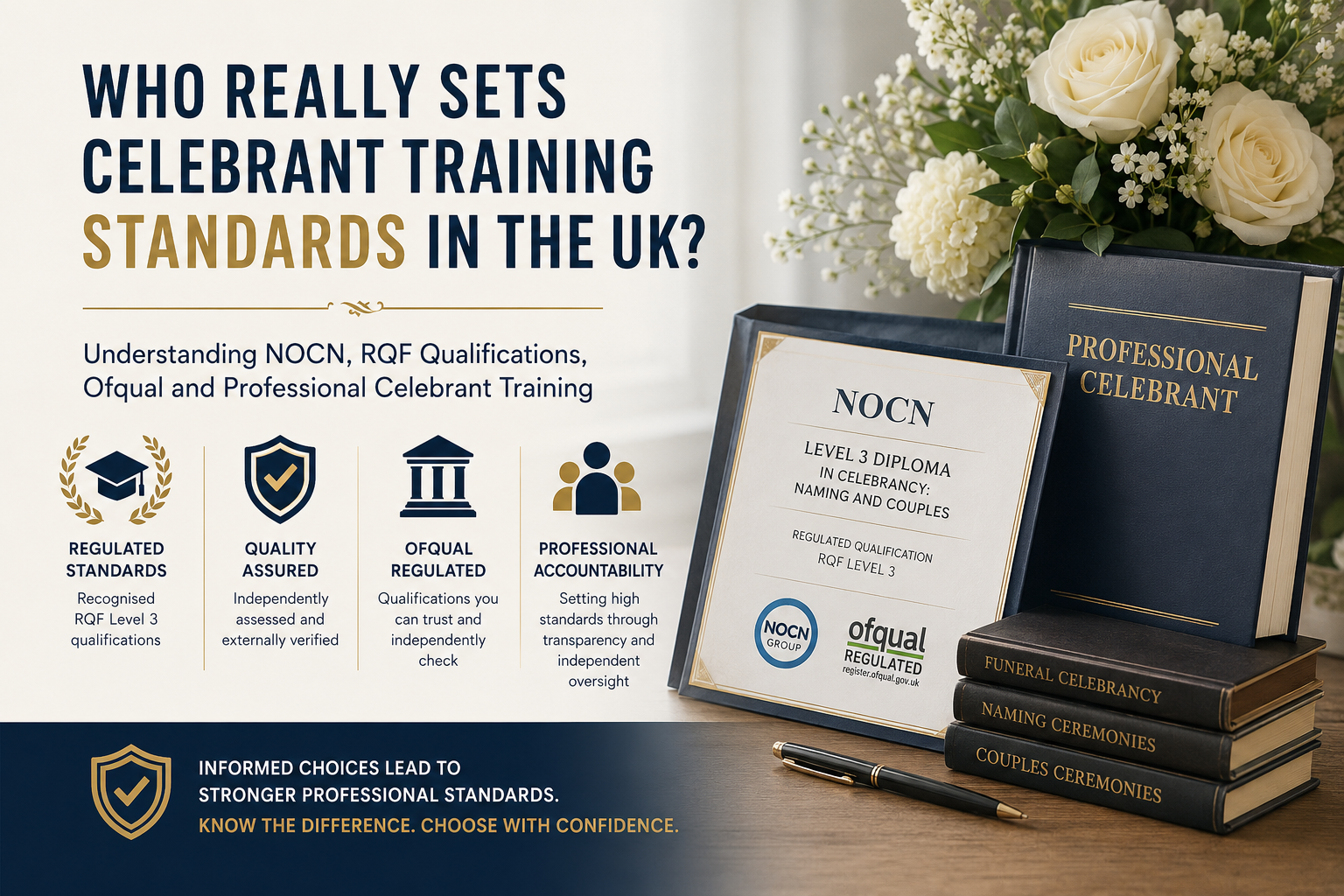
Who sets celebrant training standards in the UK? Understand NOCN, RQF Level 3 qualifications, Ofqual and what NOCN Approved Centre status means.