
Being a Celebrant with Dyslexia: Why Learning Difficulties Don’t Define Your Success
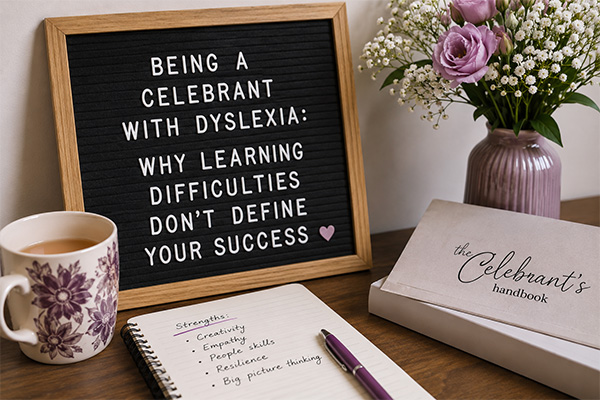
Celebrancy and Dyslexia: Turning Challenges into Strengths
When people think about becoming a celebrant, they often imagine someone who is confident with words, comfortable speaking in public, and able to write meaningful ceremonies with ease. For many people living with dyslexia or other learning difficulties, that image can sometimes feel intimidating.
The truth is that some of the most compassionate, creative, and successful celebrants have dyslexia.
Having a learning difficulty doesn’t prevent you from becoming an exceptional celebrant. In fact, many of the qualities associated with dyslexia can become some of your greatest strengths when working with families and creating personalised ceremonies.
What is Dyslexia?
Dyslexia is a common learning difference that can affect reading, writing, spelling, and the way information is processed. It varies from person to person, and many individuals develop highly effective strategies to manage the challenges they face.
Importantly, dyslexia has absolutely no connection to intelligence. Many successful business owners, entrepreneurs, writers, public speakers, and professionals have dyslexia and thrive in their chosen fields.
The Unique Strengths Dyslexic Celebrants Bring
While dyslexia can present challenges, it can also bring qualities that are incredibly valuable in celebrancy.
Creativity
Many people with dyslexia are highly creative thinkers. Celebrants regularly need to create unique and personalised ceremonies that reflect an individual’s life, values, and personality. Creative thinking allows celebrants to tell stories in meaningful and memorable ways.
Strong People Skills
Dyslexic individuals often develop excellent communication and listening skills. As celebrants, we spend much of our time listening to families, understanding their stories, and helping them feel supported during significant moments in their lives. If you are unsure what this looks like in everyday practice, our guide What Does a Celebrant Actually Do? explains the role in much greater detail.
Empathy and Understanding
Living with a learning difficulty can help develop resilience, patience, and empathy. These qualities are invaluable when supporting families through bereavement, wedding planning, naming ceremonies, and other life events.
Big Picture Thinking
Many dyslexic people naturally focus on the bigger picture rather than getting lost in small details. This can help celebrants create ceremonies that flow naturally and capture the essence of a person’s story.
Overcoming Challenges as a Celebrant
There’s no denying that celebrancy involves writing. Eulogies, wedding ceremonies, scripts, and professional correspondence all require clear communication.
However, modern technology has transformed the way celebrants work.
Tools such as spell-check software, speech-to-text technology, grammar support, digital note-taking tools, templates, and teleprompter software can make the writing process significantly easier and more accessible.
Many celebrants also develop their own systems that help them work efficiently and confidently.
Confidence Comes from Practice
One of the biggest barriers for people with dyslexia isn’t their ability; it’s often confidence.
Many people spend years believing they aren’t capable because of difficulties experienced at school or in traditional educational settings. Yet celebrancy is about far more than perfect spelling or grammar.
Families remember how you made them feel.
They remember your warmth, your compassion, your professionalism, and your ability to tell their loved one’s story with care and dignity.
Those qualities can’t be measured by a spelling test.
Training as a Celebrant with Dyslexia
If you’re considering celebrant training and have dyslexia, it’s important to choose a training provider that understands different learning styles and offers appropriate support.
At The School of Civil Celebrancy, this subject is close to our hearts. Our Principal is dyslexic, so we understand first-hand that learning differences can bring challenges, but they can also bring creativity, empathy, resilience, and a deeply human way of connecting with others.
This lived experience helps shape the way we support our students. We believe dyslexia shouldn’t be seen as a barrier to becoming a celebrant, but as part of a person’s unique story, strengths, and way of seeing the world.
Our aim is to provide kind, practical, and encouraging support, helping each student grow in confidence as they develop their own voice as a celebrant.If you would like to understand how our online learning works, you may also find Benefits of Learning by Zoomhelpful.
A good celebrant training programme should focus on practical skills, ongoing assessment, constructive feedback, and an inclusive learning environment where every student has the opportunity to succeed.
Learning difficulties should never be viewed as barriers to entering the profession.
Real-Life Success Stories
Across the celebrancy profession, there are many successful celebrants who live with dyslexia, ADHD, and other learning differences. They have built thriving businesses, conducted meaningful ceremonies, and supported countless families.
Their success demonstrates an important truth:
People don’t choose a celebrant because they have perfect spelling.
They choose a celebrant because they are caring, trustworthy, authentic, and capable of creating a meaningful ceremony.
My Journey with Dyslexia, Jon Matson-Higgins, Minister & Celebrant.
As Principal of The School of Civil Celebrancy, this subject is a very personal one because I am dyslexic myself.
I wasn’t diagnosed until I was 32 years old. Like many people of my generation, I simply grew up believing I had to work harder than everyone else. Reading, spelling and writing often took me longer, and there were times when I questioned my own ability because I couldn’t understand why some things seemed more difficult for me than they did for other people.
When I finally received my diagnosis, it answered a lot of questions. It helped me understand that I wasn’t lacking intelligence or ability; my brain simply processed information differently. Looking back now, I don’t see dyslexia as a weakness. In fact, I often describe it as my superpower.
That may sound like an odd thing to say, but living with dyslexia has taught me that there is nearly always another way of doing something. If one approach doesn’t work, I find another. If technology helps, I use it. If I need more time, I take it. Rather than seeing obstacles, I have learned to look for solutions, and that approach has stayed with me throughout both my personal and professional life.
Like many people with dyslexia, I have also experienced the frustration of being underestimated. Sadly, I have been let down by a number of training providers, not only within celebrancy but in other fields as well. There are still people who wrongly assume that dyslexia means you are less intelligent or somehow less capable. Nothing could be further from the truth. Dyslexia affects the way we process information; it does not determine our intelligence, our compassion or our potential.
Over the years, I have had the privilege of supporting thousands of families as both a minister and celebrant. I have written and delivered funeral, wedding and naming ceremonies, established The School of Civil Celebrancy and trained many celebrants who now work across the UK. None of that happened because my dyslexia disappeared. It happened because I found ways of working that suited me.
I still work differently, and I suspect I always will. I use technology every day to support my writing, my iPad is always with me and I have developed systems that help me stay organised. I don’t see those as weaknesses; I simply see them as professional tools that allow me to produce work to the highest standard. Every successful person develops methods that help them do their job well. Mine just happen to be shaped by the way my brain works.
As a minister and celebrant, I have delivered many hundreds of ceremonies over the years, and one thing I have learned is that there is no single “right” way to work. Every celebrant develops their own style. Some prefer detailed scripts, others work from cue cards, some use a teleprompter and others rely on only a few notes. The important thing isn’t how you prepare or deliver a ceremony; it’s whether you provide a professional, compassionate and meaningful service for the families who have placed their trust in you.
What families remember has never been whether every word in my notes was spelt perfectly. They remember whether I listened, whether I understood the person they loved and whether I helped them create a ceremony that truly reflected that person’s life. Those are the qualities that define a good celebrant, and none of them are measured by a spelling test.
That same philosophy runs through The School of Civil Celebrancy. We recognise that every learner is different, and we don’t expect everyone to learn in exactly the same way. Our role is to help each learner develop the confidence, knowledge and practical skills needed to become a professional celebrant while supporting them in the way that works best for them.
For learners studying towards an NOCN qualification, we do ask that you provide a copy of your Educational Psychologist’s report, diagnostic assessment or learning support statement if you have one. This is an NOCN requirement and enables us to request any reasonable adjustments that you may be entitled to, such as additional assessment time or other appropriate support.
Some learners make full use of those adjustments, while others prefer to rely on the systems they have already developed over many years. There is no right or wrong approach. Our responsibility is to ensure that support is available whenever it is needed, allowing every learner the opportunity to demonstrate their knowledge and abilities fairly.
If there is one thing my own experience has taught me, it is that dyslexia should never be seen as a barrier to becoming a celebrant. It may mean you approach things differently, but different does not mean less capable. Find the methods that work for you, continue learning and don’t be afraid to use the support available. What matters most in celebrancy is not perfect spelling or flawless grammar. It is your ability to listen, to care, to communicate with compassion and to support people through some of the most important moments of their lives.
If you’re wondering whether you have the qualities needed to become a celebrant, our article Can Anyone Become a Celebrant?explores the personal qualities that matter far more than academic ability.
Final Reflections
Being dyslexic doesn’t make you less capable of becoming a celebrant.
In many ways, the experiences gained through overcoming challenges can help you become a more understanding, compassionate, and effective professional.
If you’ve ever wondered whether dyslexia should stop you from pursuing a career as a celebrant, the answer is simple: it shouldn’t.
The skills that matter most in celebrancy are kindness, empathy, creativity, listening, and genuine human connection.
Those qualities have nothing to do with how quickly you can spell a word.
They have everything to do with the difference you can make in people’s lives.
Thinking About Becoming a Celebrant?
Whether you have dyslexia, another learning difficulty, or simply want a rewarding career helping people through life’s most important moments, celebrancy offers a profession where personality, compassion, and authenticity matter most.
Your learning difference doesn’t define your future.
Your passion, care, and commitment do.
For more information about our celebrancy training courses, including the NOCN Level 3 Diploma in Funeral Celebrancy, the NOCN Level 3 Diploma in Wedding and Naming Ceremonies, and the NOCN Level 3 Certificate in UK Celebrancy, please visit our course pages.
If you have any questions about celebrant training, qualifications or becoming a professional celebrant, please contact us. We are always happy to help, with honest advice.