One of the biggest misunderstandings about celebrancy is that anyone can simply decide to become a celebrant overnight.
Technically, celebrancy itself is not legally regulated in the UK. However, that does not mean training and qualifications are unimportant. In fact, they matter enormously.
Families, couples, and communities place huge trust in celebrants. Whether leading a funeral, wedding, or naming ceremony, you are supporting people through some of the most emotional and important moments of their lives.
That responsibility should never be taken lightly.
At The School of Civil Celebrancy, we strongly believe professional training matters, not only for the celebrant, but also for the people they support.
Is There a Legal Requirement?
At present, there is no single legal licence required to become a celebrant in the UK.
However, many professional celebrants choose to complete accredited training that follows recognised national occupational standards.
This helps ensure they are properly prepared to:
- Write ceremonies professionally
- Deliver ceremonies confidently
- Communicate sensitively
- Understand professional boundaries
- Support families appropriately
- Work ethically and professionally
Why Accredited Training Matters
Not all celebrant courses are equal.
Some courses are very short and offer little real support, practical training, or mentoring. Others are built around genuine professional standards and real industry experience.
Choosing accredited training helps provide confidence for both the celebrant and the families they later support.
It also demonstrates commitment to professionalism.
Why Accredited Training Matters
Not all celebrant courses are equal.
Some courses are very short and offer little real support, practical training, or mentoring. Others are built around genuine professional standards and real industry experience.
Choosing accredited training helps provide confidence for both the celebrant and the families they later support.
It also demonstrates commitment to professionalism.
If you’re comparing different training options, it’s also worth understanding the difference between a Certificate and a Diploma before deciding which qualification is right for you.
What Is NOCN?
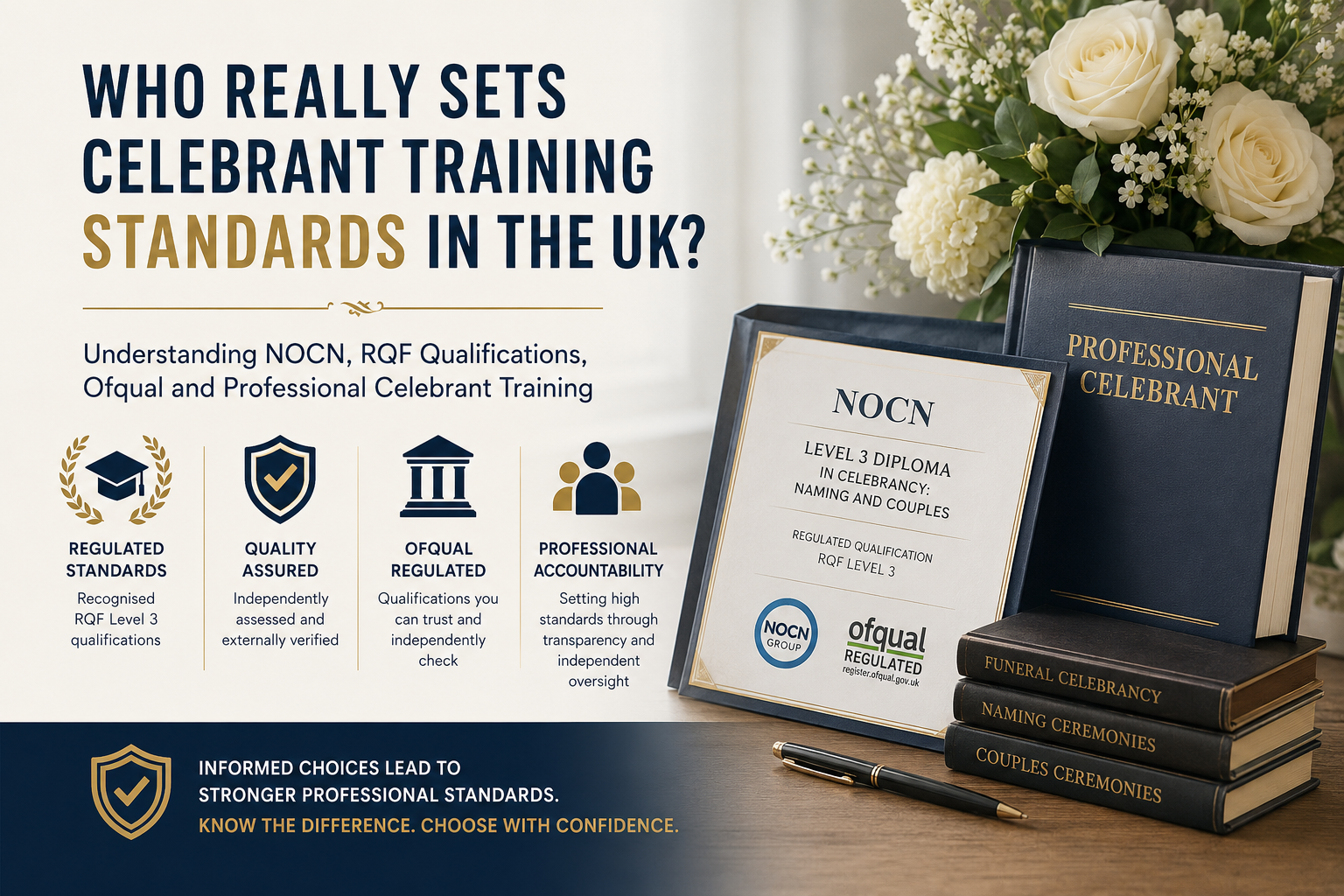
NOCN is a nationally recognised awarding organisation in the UK.
Courses aligned to NOCN standards are designed around proper occupational competencies rather than simply ticking boxes.
This means students are learning skills that genuinely reflect real celebrant work.
What Will You Learn During Training?
A good celebrant training course should cover far more than simply reading scripts aloud.
Training should include areas such as:
- Ceremony structure
- Public speaking
- Professional communication
- Working with families
- Safeguarding
- Listening skills
- Ethics and professionalism
- Business awareness
- Ceremony writing
- Practical delivery skills
Good training builds confidence gradually and supportively.
Learning with experienced tutors through live online sessions also gives learners the opportunity to ask questions, receive feedback and develop practical skills in a supportive environment.
Do You Need Previous Experience?
No.
Many successful celebrants come from completely unrelated careers.
What matters most is often your ability to connect with people warmly and genuinely.
Life experience can actually become one of your greatest strengths as a celebrant.
If you’re wondering whether this career is right for you, you may also like to read Can Anyone Become a Celebrant?
Final Thoughts
While celebrancy may not currently require a legal licence, proper professional training should never be treated as optional.
People deserve skilled, compassionate, and professionally trained celebrants who understand the importance of the role they hold.
If you are considering training as a celebrant, look carefully at the values, standards, and support offered by the training provider.
A qualification is important.
But genuine guidance, mentoring, professionalism, and human understanding matter just as much.