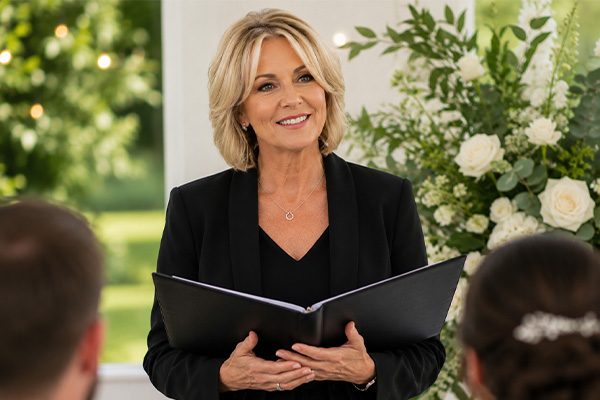
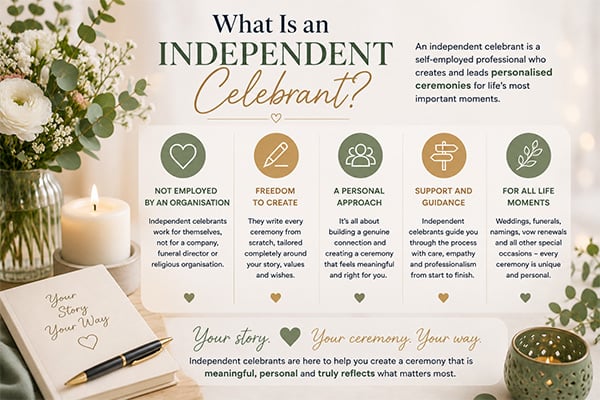
Many people have heard the word “celebrant,” but are not entirely sure what they actually do.
Quite often, people only discover celebrants when arranging a funeral, planning a wedding, or looking for a more personal type of ceremony.
At its heart, celebrancy is about creating ceremonies that reflect real people and real lives.
A celebrant helps create meaningful moments that feel personal, warm, and genuine.
For anyone considering this profession, our guide on how to become a celebrant explains the first steps.
Creating personal ceremonies
Unlike standardised ceremonies, celebrant-led ceremonies are written around the individual or family.
No two ceremonies should feel exactly the same.
A celebrant spends time getting to know the people involved, listening to stories, understanding personalities, and creating something unique to them.
This may involve:
- Writing personalised ceremonies
- Meeting families or couples
- Offering guidance and reassurance
- Helping choose readings or music
- Delivering the ceremony itself
- Supporting people emotionally throughout the process
These responsibilities are among the reasons why professional celebrant training is so important.
Funeral ceremonies
Funeral celebrants support families following a bereavement.
This often includes meeting with relatives, gathering memories, writing eulogies, creating service structures, and leading the funeral service itself.
A good funeral celebrant helps families feel supported, heard, and cared for during a very difficult time.
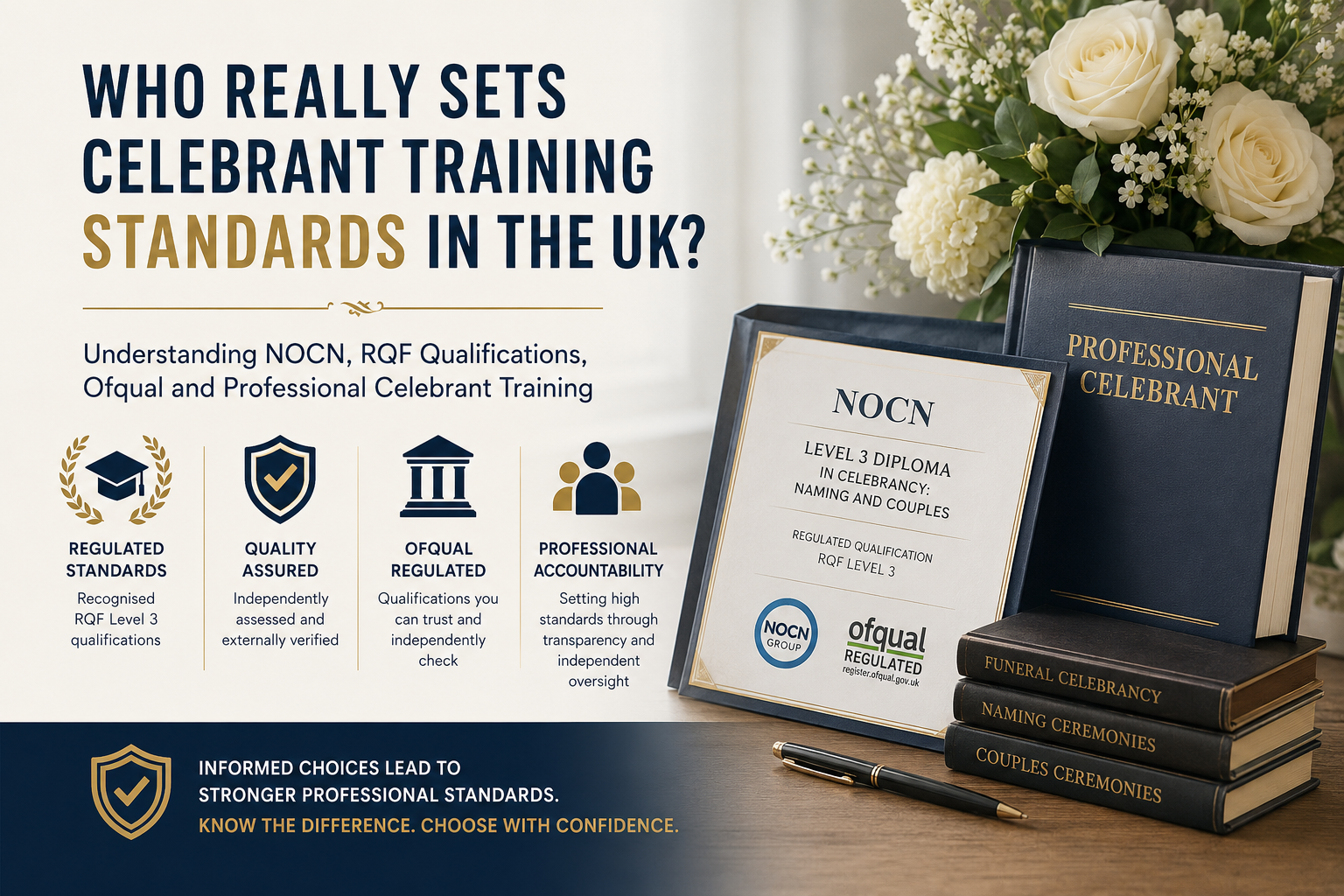
Those wishing to specialise in this area may want to explore the NOCN Level 3 Diploma in Funeral Celebrancy.
Funeral celebrancy can be deeply rewarding, although it also involves emotional responsibility and careful preparation. Our article about the realities of working as a celebrant offers an honest insight into the profession.
Wedding ceremonies
Wedding celebrants work with couples to create personal wedding ceremonies that reflect their relationship, personalities, and values.
This may include:
- Personal vows
- Readings
- Symbolic elements
- Family involvement
- Cultural traditions
- Relaxed and informal styles
Celebrant-led weddings offer far more flexibility than many traditional ceremonies.
Anyone interested in wedding and family ceremonies can learn more about the NOCN Level 3 Diploma in Naming, Couples and Family Celebrancy.
As marriage law continues to develop, our latest guide to wedding law reform in England and Wales explains what proposed changes may mean for couples and celebrants.
Naming ceremonies and other ceremonies
Celebrants may also lead:
- Naming ceremonies
- Vow renewals
- Commitment ceremonies
- Memorial services
- Celebration of life ceremonies
Each one is tailored to the people involved.
This variety is one reason some learners begin with the NOCN Level 3 Certificate in Civil Celebrancy, which provides a broad introduction to different types of ceremony.
Is a celebrant just a public speaker?
Not really.
Public speaking is only one small part of the role.
Much of celebrancy happens quietly behind the scenes through listening, writing, supporting, guiding, and helping people feel comfortable.
The human connection matters far more than performance.
If you are wondering whether you have the right qualities for the profession, read Can Anyone Become a Celebrant?
On reflection
Celebrants help people mark important moments in life with meaning, care, and humanity.
Whether supporting families through grief or helping couples celebrate love, celebrancy is ultimately about people feeling seen, heard, and valued.
That is what makes the role so special. However, choosing the right training route is important, so it may also help to read about the difference between a Certificate and a Diploma.
To learn more about the team, values and professional approach behind our courses, visit About The School of Civil Celebrancy.